Brain Heterogeneity
Why do people with the same diagnosis show different brain abnormalities and clinical outcomes?
Understanding the Origins of Human Heterogeneity
Why do people with similar diseases, biology, or experiences develop different brains, minds, and health outcomes?
I combine neuroscience, multimodal human data, computational modeling, and AI to understand the origins of these individual differences.
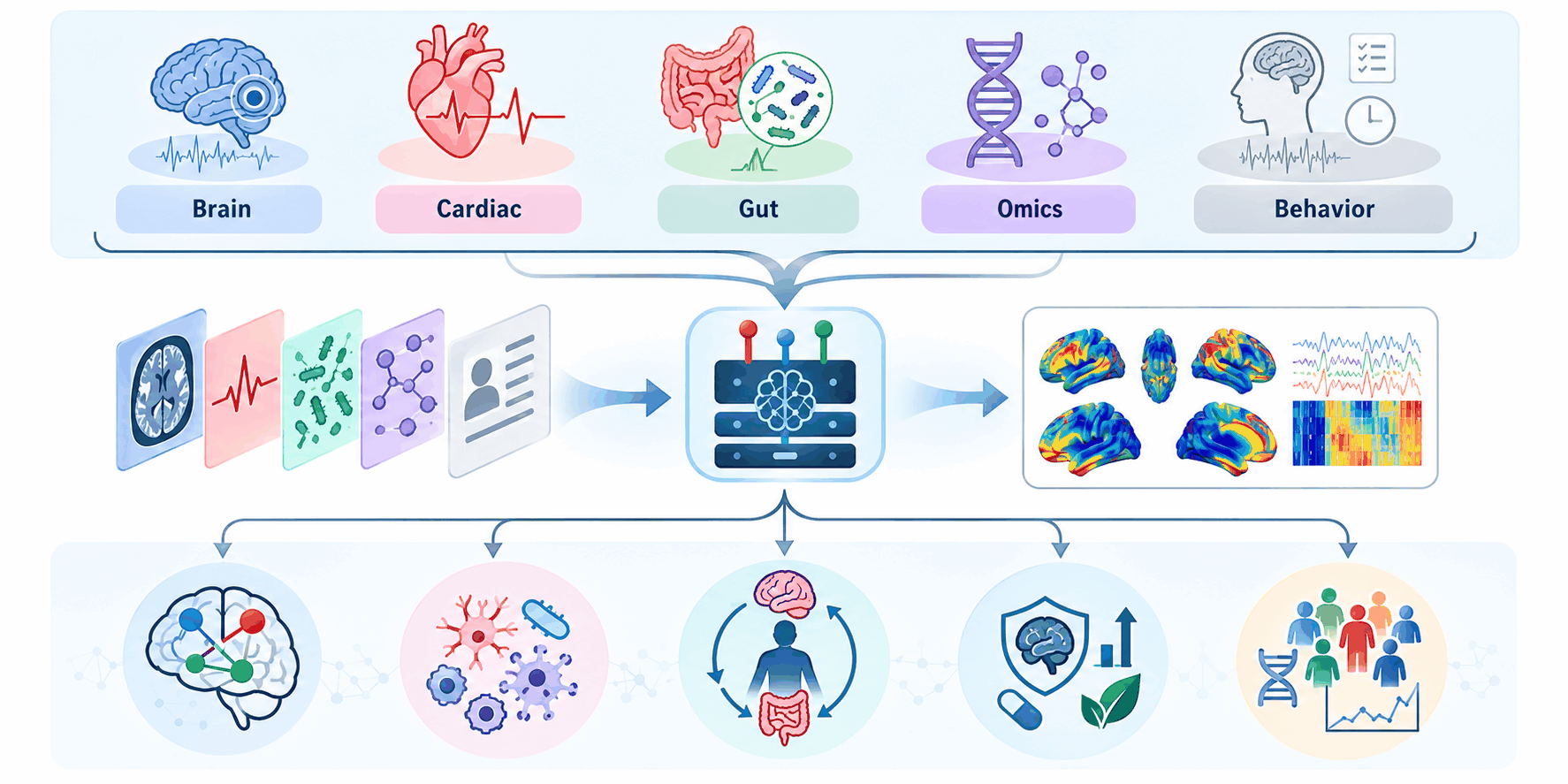
Individual differences do not begin in the brain. They accumulate across biology, environment and experience, then propagate through the body into the brain, mind and health.
From describing human differences to understanding where they come from.
Across disorders and datasets, my work returns to the same three questions — each one a step further from description toward mechanism.
Why do people with the same diagnosis show different brain abnormalities and clinical outcomes?
What biological systems contribute to different brain trajectories?
Can these differences explain resilience, vulnerability and treatment response?
Six first-author results that trace the program from clinical heterogeneity to its biological origins.
Individualized functional connectivity reveals distinct neural signatures of antidepressant and placebo response.
A discriminative connectivity signature separates cocaine use disorder from controls and links to who benefits from brain stimulation.
Symptom-associated brain connectivity patterns split dementia into subtypes with distinct clinical profiles.
Machine learning and transcriptomic integration resolve distinct spatial patterns of Alzheimer's pathology and the molecular programs behind them.
The functional connectome of superagers carries early markers of both resilience and vulnerability to Alzheimer's disease. Preprint on bioRxiv.
Brain–gut crosstalk is already associated with accelerated brain aging in young and mid-life adults, across independent cohorts.
Transferred from The Lancet Healthy Longevity at second revision.
Three directions, each a different way of asking where human differences come from — and one of them asks whether AI can help us find out faster.
How do metabolic, immune, cardiovascular, microbial and behavioral systems shape individual brain trajectories?
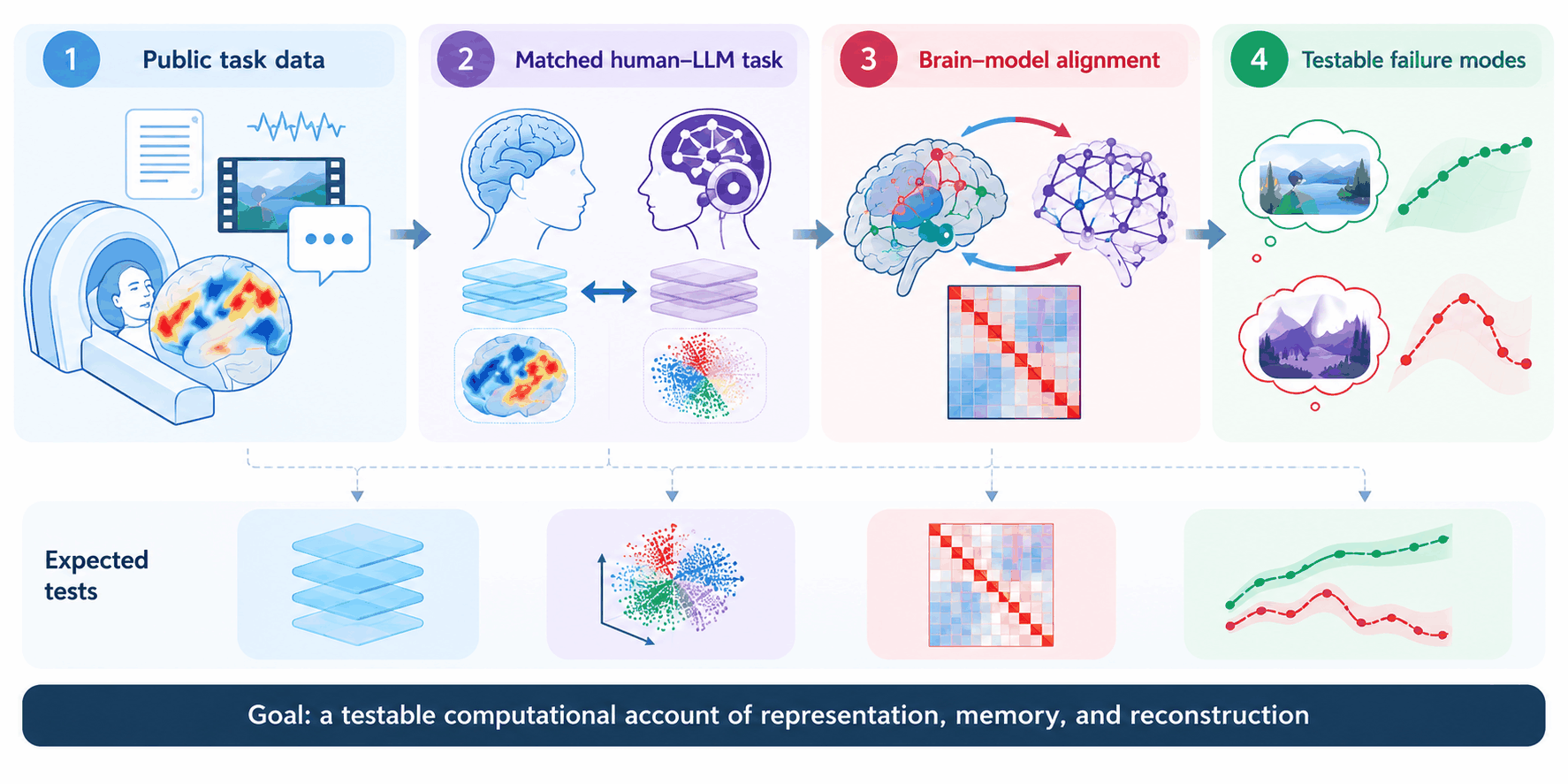
Why does the same experience produce different memories, interpretations and emotional responses?
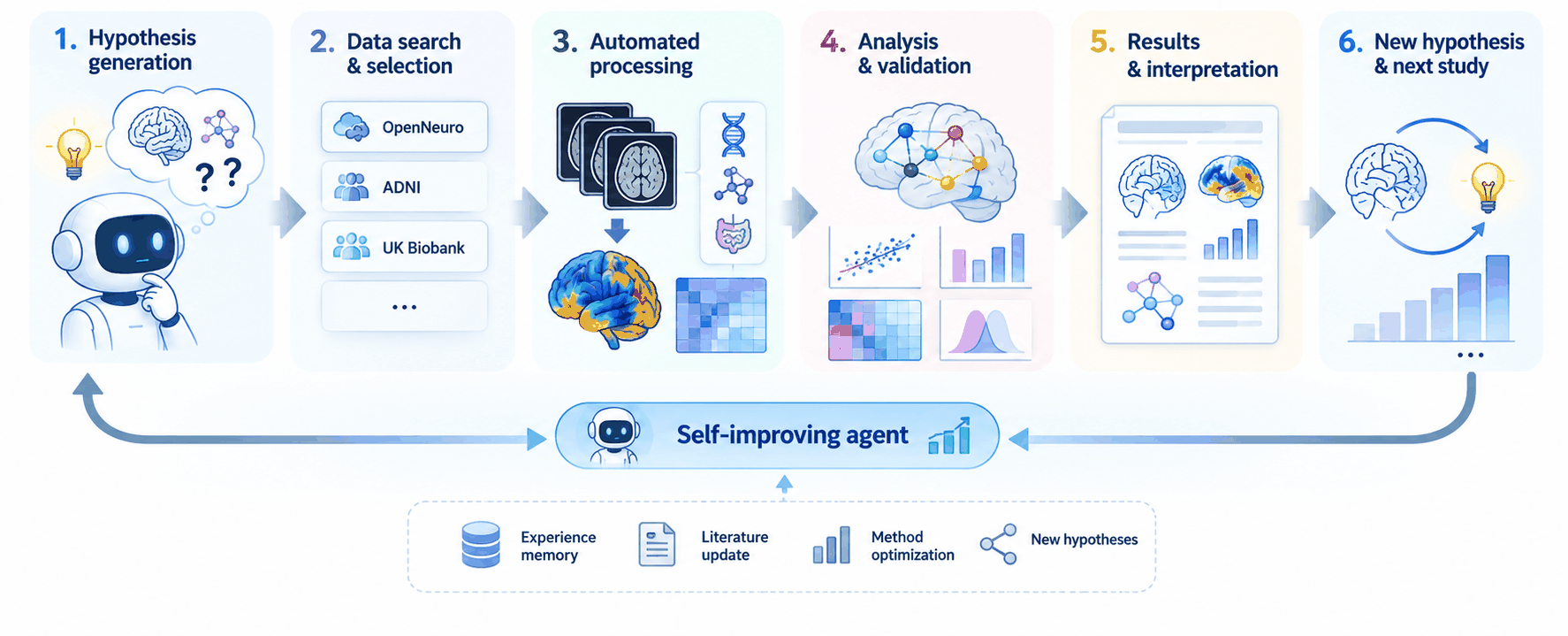
Can self-improving AI scientists autonomously formulate and test hypotheses about the human brain?
My path to that question has crossed biology, bioengineering, artificial intelligence, neuroimaging, psychiatry, aging and multi-omics. I don't treat these as separate disciplines — they are different levels of description of the same human system, and heterogeneity looks different at every one of them.
Some friends call me by my Chinese courtesy given name, Ziqing (子清). I trained with Prof. Yu Zhang, and with Prof. Arpana Church at UCLA, where I learned gut-related omics.
Each stop added a level of description to the same system.


Biology → Engineering → Brain → Body → Intelligence
The habits that keep the other half of my head working.
Calligraphy · Sketching · Piano · Reading
Hiking · Badminton
Animation · Games
Hoping that some of it will eventually grow into something that improves people's lives.
Always glad to hear from people working at the intersection of brain, body and AI — especially on modeling heterogeneity in brain and mental health.